

Your car’s alternator is responsible for keeping the battery charged and powering electrical components. When it starts failing, you may notice dim lights, strange noises, or even a dead battery. Ignoring the warning signs can leave you stranded with a car that won’t start. This guide will help you recognize symptoms of a failing alternator early and take action before it’s too late.
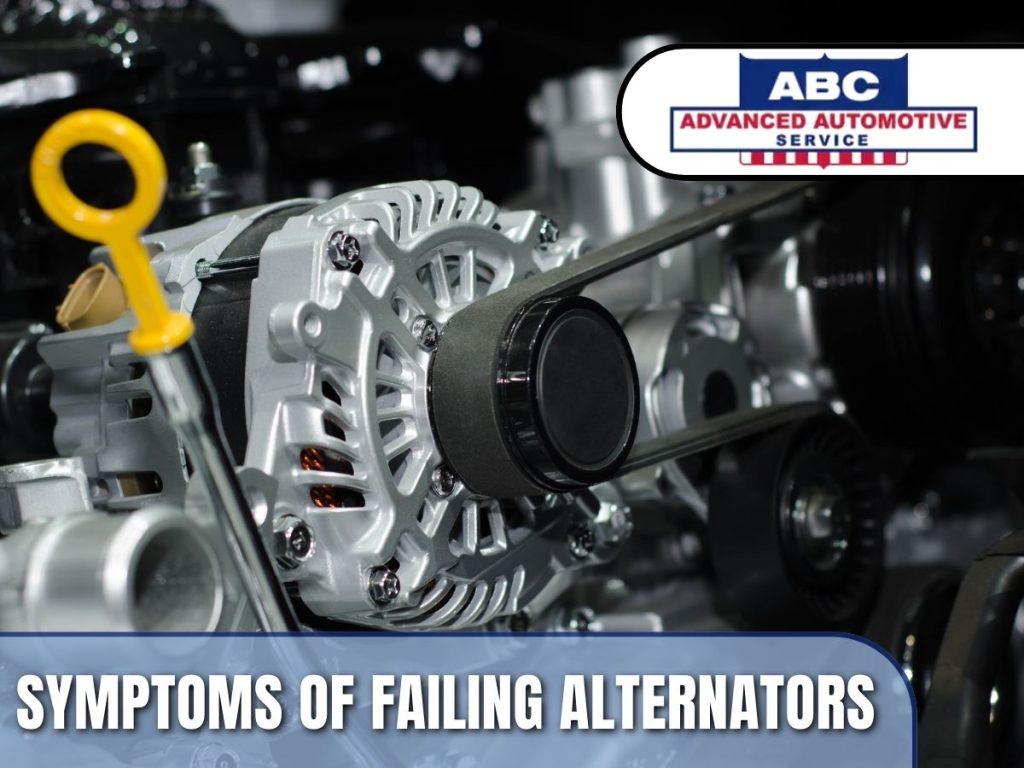
Common Signs of a Failing Alternator
Recognizing alternator failure early can save you from costly repairs. Here are the most common symptoms:
Flickering or Dim Lights
A common early sign of alternator issues is when your headlights start to flicker or appear dim. The alternator is responsible for powering your car’s electrical system, and if it begins to fail, it may not provide enough voltage. As a result, your headlights might dim, particularly when your car is idling. You might also notice the dashboard lights flickering, headlights brightening when you accelerate, or even electrical features like power windows operating slower than usual. If you experience any of these symptoms, it’s a good idea to have your alternator checked.
Dead or Weak Battery
A car battery can die for many reasons, but if you frequently experience a dead battery, your alternator could be the real problem. The alternator is supposed to recharge the battery while you drive. If it fails, your battery drains quickly. Warning signs include:
- Needing multiple jump-starts within a short period.
- A battery warning light appears on your dashboard.
- Your car starts but loses power soon after.
📌 Quick Check: If you jump-start your car and it dies again within minutes, your alternator isn’t supplying enough power to keep it running.
Strange Noises (Whining or Grinding)
A failing alternator often produces whining, grinding, or squealing noises under the hood. These sounds could indicate:
- Worn-out bearings inside the alternator.
- A loose or slipping serpentine belt, struggling to turn the alternator pulley.
- Electrical whining due to excessive resistance in the alternator’s wiring.
If you hear these noises, have your alternator inspected before it completely fails.
Warning Light on the Dashboard
Many modern vehicles display a battery-shaped warning light (⚠️🔋) when there’s an issue with the charging system. This light may also appear as ALT (alternator) or GEN (generator). If you see this warning:
- Check if it turns on and off sporadically.
- Pay attention to it coming on when using multiple electrical components, such as headlights and air conditioning.
- Have your alternator tested to confirm the issue.
Electrical Failures and Malfunctions
Your car relies on the alternator to power all electrical accessories. When it starts to fail, you might notice:
- Power windows moving slowly.
- Radio cutting out or resetting.
- Windshield wipers operating erratically.
- Seat heaters, air conditioning, or defrosters not working properly.
entrical failures occur at the same time, the alternator is likely the root cause.
Difficulty Starting the Car or Stalling
Since the alternator keeps the battery charged, a failing alternator can cause starting issues or stalling. Common signs include:
- Clicking sounds when turning the key.
- Engine cranking slowly or struggling to start.
- The car stalling while driving due to a lack of power supply.
If your vehicle suddenly stalls, get it checked immediately, as a dead alternator can cause complete engine shutdown.
Burning Smell from the Engine Bay
A burning rubber or electrical smell near the engine is a serious warning sign. This could mean:
- The alternator’s internal components are overheating, which can be a sign of a larger issue that requires expertise in fixing overheating engines.
- A worn-out alternator belt is slipping and burning against pulleys.
- Electrical wiring is damaged or short-circuiting.
Ignoring this symptom can lead to alternator failure or even an electrical fire.
Erratic RPM and Speedometer Readings
In some vehicles, a failing alternator can affect the instrument cluster, causing:
- The speedometer, tachometer, or fuel gauge fluctuate.
- The dashboard lights behave erratically.
- Inaccurate RPM readings, making the engine seem unstable.
If your gauges are acting strangely, check your charging system before the alternator dies completely.
What Happens If You Ignore Alternator Failure?
If you ignore these symptoms, your alternator will eventually stop working, leading to:
- A completely dead battery.
- Power loss while driving, potentially causing an accident.
- Expensive repairs, as electrical failures can damage other components.
Case Study: Cost of Ignoring a Failing Alternator
A driver ignored flickering headlights and a battery warning light, assuming it was a minor issue. One night, while driving home, the car suddenly stalled on a highway. The battery was completely drained, and the vehicle had to be towed. The mechanic diagnosed a failed alternator and a damaged battery, resulting in a $650 repair bill. If they had replaced the alternator sooner, they could have saved $200–$300 in unnecessary expenses.
Conclusion: Act Before It’s Too Late!
A failing alternator can lead to complete power loss, leaving you stranded or causing dangerous driving conditions. If you notice symptoms like dim lights, electrical failures, strange noises, or a battery warning light, get your alternator checked immediately.
🔧 Don’t wait for a breakdown! Test your alternator today and ensure your car stays powered. 🚗
👉 Looking for more car maintenance tips? Explore our latest guides to keep your vehicle running smoothly!
FAQs
1. How long does an alternator last?
A well-maintained alternator typically lasts 7 to 10 years or 80,000 to 150,000 miles, depending on driving conditions and vehicle use.
2. Can I drive with a bad alternator?
You might be able to drive for a short distance, but once the battery is depleted, your car will stall. Driving with a failing alternator is risky and can leave you stranded.
3. How much does it cost to replace an alternator?
The average cost of a new alternator is $300–$700, including labor. Luxury or high-performance vehicles may cost over $1,000.
4. Can I test my alternator at home?
Yes. With a multimeter, check the voltage at the battery terminals while the car is running. A healthy alternator should read 13.8–14.5 volts. If it’s below 12 volts, your alternator is failing.
5. What causes an alternator to fail?
Common causes include wear and tear, overheating, fluid leaks, a bad voltage regulator, or a loose serpentine belt. Regular maintenance can extend its lifespan.