

A weak car battery can leave you stranded at the worst possible time. If your car is slow to start, your headlights are dim, or your electronics flicker unexpectedly, these could be warning signs that your battery is failing. Ignoring these early symptoms may lead to complete battery failure, leaving you stuck with a car that won’t start. This guide will help you recognize the symptoms of weak car batteries, understand why it happens, and take action before it completely dies.
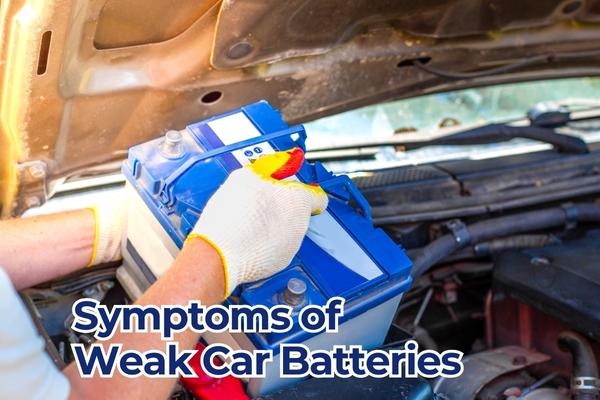
Common Signs of a Weak Car Battery
- Slow Engine Crank and Hard Starting
One of the most noticeable symptoms of a weak battery is slow cranking when you turn the ignition. Instead of the usual quick and strong engine turnover, you might hear a sluggish, drawn-out sound before the engine finally starts—or worse, it may not start at all. This happens because the battery doesn’t have enough power to turn the starter motor efficiently.
If you experience this frequently, especially on cold mornings, it’s a clear sign your battery is weakening. Cold weather worsens battery performance by reducing its ability to generate power, making weak batteries struggle even more.
- Dim Headlights and Electrical Malfunctions
Car batteries power more than just the engine. If your headlights appear dimmer than usual, it could mean the battery isn’t providing enough voltage to maintain their brightness. Other electrical symptoms may include:
- Flickering interior or dashboard lights.
- Power windows and locks respond slower than normal.
- Radio or infotainment system resetting unexpectedly.
A weak battery can’t supply consistent power to these systems, leading to noticeable performance drops.
- Clicking Sound When Turning the Key
If you hear a rapid clicking sound when you turn the ignition, this is another indicator of a weak battery. The clicking noise comes from the starter solenoid, which tries to engage but doesn’t receive enough power to turn the engine. In some cases, the car may eventually start after multiple attempts, but this issue will only worsen over time.
- Frequent Need for Jump-Starts
If you find yourself frequently needing to jump-start your car, your battery is likely on its last legs. While jump-starting can get your car running again, it’s only a temporary solution. A healthy battery should hold a charge and restart the vehicle without assistance. If your battery keeps dying after short drives, it may no longer hold a proper charge.
- Battery Warning Light on Dashboard
Modern vehicles have dashboard warning lights that indicate potential battery issues. If your battery or charging system warning light comes on, it could mean:
- The battery voltage is too low.
- The alternator isn’t charging properly.
- There’s a problem with the battery terminals or wiring.
Ignoring this light can lead to a dead battery at an inconvenient time.
Causes and Prevention of a Weak Car Battery
Common Causes of Battery Weakness
Car batteries don’t weaken overnight. Several factors contribute to their decline:
- Age of the Battery – Most car batteries last between 3 to 5 years. After this period, they lose their ability to hold a charge effectively.
- Extreme Temperatures – Hot weather accelerates fluid evaporation inside the battery, while cold weather slows down the chemical reactions needed to generate power.
- Frequent Short Trips – Driving short distances without allowing the alternator to fully recharge the battery can lead to premature wear.
- Parasitic Drain – Accessories like interior lights, radio, or even a faulty alternator can drain the battery when the car is off.
- Loose or Corroded Connections – Corrosion on the battery terminals prevents proper electrical flow, weakening the battery’s performance.
Preventing Battery Weakness and Failure
To avoid unexpected battery failure, follow these preventive measures:
- Test your battery regularly. Many auto shops offer free battery testing, helping you catch issues early.
- Clean the battery terminals. Corrosion can interrupt power flow. Use a mix of baking soda and water to clean the terminals periodically.
- Limit short trips. If possible, drive for at least 15-20 minutes to allow the alternator to recharge the battery fully.
- Turn off electronics when not needed. Leaving headlights, interior lights, or charging devices on when the engine is off drains battery power unnecessarily.
- Consider a trickle charger. If you don’t drive frequently, a trickle charger can maintain battery health by keeping it charged when the car isn’t in use.
Case Study: Avoiding a Battery Breakdown
Scenario: Jake noticed his car cranking slower each morning but ignored the issue, assuming it was just due to cold weather. One day, his car wouldn’t start at all, and he had to rely on a jump-start. After testing the battery at an auto shop, he learned it was over four years old and had lost most of its capacity.
Solution: He replaced the battery before it failed completely and began checking its voltage every few months. Since then, his car has started reliably, even in cold conditions.
Lesson: Paying attention to early warning signs can prevent an inconvenient breakdown. Regular maintenance and timely battery replacement are key to avoiding roadside emergencies.
Conclusion
Recognizing the symptoms of a weak car battery can save you from unexpected breakdowns and costly repairs. Slow engine cranking, dim headlights, electrical malfunctions, and frequent jump-starts are clear signs that your battery is struggling. Regular maintenance, battery testing, and avoiding unnecessary drains can help prolong its lifespan.
FAQs
1. How can I tell if my battery or alternator is the problem?
If your car starts after a jump but dies shortly after, the alternator may not be charging the battery. If the car stays running after a jump, but struggles again later, the battery is likely the issue.
2. Can a weak battery cause engine performance issues?
Yes, a weak battery can cause sensors and fuel injectors to receive inconsistent voltage, leading to rough idling, poor acceleration, or even stalling.
3. How often should I replace my car battery?
Most batteries last 3 to 5 years, but testing your battery annually after three years can help determine when it needs replacement.
4. What’s the best way to test my car battery at home?
Use a multimeter to check the voltage. A fully charged battery should read around 12.6V when the car is off and at least 13.7V to 14.7V when running.
5. Can extreme weather kill a car battery?
Yes, both hot and cold temperatures can damage battery life. Heat causes fluid evaporation, while extreme cold slows down chemical reactions, making it harder for the battery to produce power.
🔧 Take Action: If you notice any warning signs, test your battery before it completely fails. Stay proactive with routine checks and proper battery care to ensure a reliable start every time. For more car maintenance tips, explore our related articles: 🚗⚡
Repairing Faulty Wiring Harness