

Few things are as frustrating as turning the key in your ignition and getting nothing in response. Whether you hear a clicking sound, a slow crank, or complete silence, starter motor issues could be the culprit. The starter motor is responsible for turning the engine over when you start your car, making it a crucial part of your vehicle’s operation.
Understanding the signs of a failing starter can help you address the problem before you find yourself stranded. In this guide, we’ll break down the most common starter motor issues, how to diagnose them, and what steps you can take to fix them.
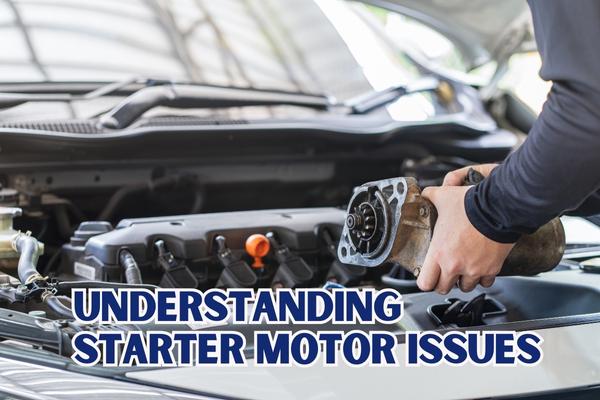
Common Symptoms and Causes of Starter Motor Failure
Several warning signs can indicate that a starter motor is beginning to fail. Catching these symptoms early can help prevent unexpected breakdowns and expensive repairs.
- Clicking Noise When You Turn the Key
If you hear a clicking sound when you turn the key, it’s a classic sign of a starter issue. This usually means the starter solenoid is engaging, but the motor itself isn’t turning over. A few common reasons include:
A weak or dead battery can prevent the starter from getting enough power to function. If the battery doesn’t have enough voltage, the starter won’t engage properly.
Loose or corroded battery terminals can also cause problems. If the electrical connection isn’t strong, power won’t reach the starter. Cleaning and tightening the terminals may solve the issue.
A faulty starter solenoid could be to blame as well. The solenoid transfers power from the battery to the starter motor. If it’s not working, the motor won’t receive the charge it needs—even if the battery is in perfect condition.
- Slow Cranking or Intermittent Starting Issues
If your engine cranks slowly before starting, or if it only starts intermittently, the starter motor may be wearing out. This can be caused by:
- Worn-out starter motor brushes: Over time, the internal brushes that transfer electricity within the starter can wear down, reducing its efficiency.
- Weak battery or bad alternator: If the battery is struggling to supply enough power, or if the alternator isn’t properly charging it, the starter motor won’t operate at full strength.
- High electrical resistance in cables: Corrosion or damage to the wiring leading to the starter can reduce the power supply, causing slow cranking.
- Complete Silence When Turning the Key
If you turn the key and hear nothing—no clicking, no cranking—it’s likely that the starter motor isn’t receiving power at all. This can happen due to:
- Blown fuse or faulty ignition switch: A broken fuse or malfunctioning ignition switch can prevent power from reaching the starter circuit.
- Bad neutral safety switch: If your vehicle has an automatic transmission, a faulty neutral safety switch may prevent the starter from engaging when in “Park” or “Neutral.”
- Disconnected or damaged wiring: If the wiring between the ignition switch and the starter motor is damaged, the motor won’t receive the necessary electrical signal.
Diagnosing and Fixing Starter Motor Issues
If your car won’t start and you suspect the starter motor, there are a few steps you can take to diagnose and fix the issue.
Step 1: Check the Battery and Connections
Before blaming the starter, check if the battery is the real culprit. Use a multimeter to measure its voltage—a healthy battery should read about 12.6V with the engine off and between 13.8V to 14.5V when running.
If the voltage is low, try jump-starting your car. If it starts, the issue is likely with the battery or charging system, not the starter. Also, take a moment to inspect the battery terminals for corrosion or loose connections—clean and tighten them if needed to ensure a strong electrical flow.
Step 2: Test the Starter Motor with a Jump Wire
If the battery is in good condition, the next step is to bypass the ignition system and test the starter directly. Using a screwdriver or jumper wire, connect the positive terminal of the battery to the starter’s solenoid terminal. If the starter motor spins, the issue may be with the ignition switch, relay, or wiring rather than the starter itself.
Step 3: Listen for Unusual Noises
A grinding or whining noise when starting the car may indicate that the starter drive gear is worn or not engaging properly with the flywheel. In this case, replacing the starter motor is often the best solution. If you hear a clicking noise but the starter doesn’t turn, the solenoid may be faulty.
Step 4: Inspect the Starter Relay and Fuses
A bad starter relay or blown fuse can prevent the starter motor from receiving power. Check your vehicle’s fuse box and replace any blown fuses related to the starting system. If the relay is faulty, replacing it is a simple and cost-effective fix.
Step 5: Replace the Starter Motor If Necessary
If the starter motor has completely failed, replacement is the only solution. Most starters are located near the engine block, attached to the transmission housing. Steps to take to replace a starter motor:
- Disconnecting the battery to prevent electrical shock
- Removing the starter motor’s mounting bolts and electrical connections
- Installing a new starter and reconnecting the wiring
- Testing the system to ensure proper function
A new starter can last anywhere from 50,000 to 100,000 miles, depending on driving conditions and maintenance.
Case Study: Diagnosing a Faulty Starter in a Ford F-150
A customer brought in a 2014 Ford F-150 with a complaint that the truck wouldn’t start intermittently. Sometimes the engine would crank slowly, while other times it would just click.
We first checked the battery voltage, which was at 12.5V—indicating it was fully charged. Next, we tested the starter solenoid by bypassing the ignition switch, but the starter still failed to engage. A closer inspection revealed that the starter motor had excessive wear, and the brushes were nearly worn out.
After replacing the starter motor, the truck started instantly with no further issues. This case highlights how even an intermittent starting problem can eventually lead to complete failure if not addressed in time.
Conclusion
Understanding starter motor issues can help you avoid unexpected breakdowns and costly repairs. Common symptoms like clicking sounds, slow cranking, or complete silence when turning the key often indicate a failing starter. Diagnosing the issue involves checking the battery, testing the starter solenoid, and inspecting wiring connections.
If your starter motor shows signs of failure, addressing it early can save you from getting stranded. Regular maintenance, including cleaning battery terminals and checking wiring connections, can help extend the life of your starter system. If you’re experiencing persistent starting issues, testing and replacing the starter motor might be necessary to restore your vehicle’s reliability.
Frequently Asked Questions (FAQs)
1. How long does a starter motor typically last?
A starter motor usually lasts between 50,000 and 100,000 miles, but its lifespan depends on driving habits and maintenance.
2. Can a bad alternator cause starter motor problems?
Yes. A failing alternator can lead to a weak battery, which may cause slow cranking or starting issues that mimic a bad starter.
3. What happens if I ignore a failing starter motor?
Ignoring a faulty starter can eventually lead to a completely dead engine, leaving you stranded without warning.
4. How much does it cost to replace a starter motor?
Starter motor replacement costs typically range from $200 to $600, depending on the vehicle and labor rates.
5. Can I tap the starter to get it working temporarily?
In some cases, lightly tapping the starter motor with a wrench can temporarily free up stuck brushes, allowing the car to start. However, this is only a short-term fix.
Need More Help?
Struggling to start? Check out our guide on How to Test Alternator Output to keep your car running smoothly.