

Winter driving presents unique challenges, from icy roads to freezing temperatures that can impact your vehicle’s performance. Preparing your car for winter is essential to ensure safety, prevent breakdowns, and extend the life of your vehicle. This guide will provide detailed winterizing your vehicle tips, covering essential maintenance, emergency preparedness, and safe driving strategies.
By following these steps, you can enhance your vehicle’s reliability, minimize the risks associated with winter driving, and ensure a smoother, stress-free winter travel experience.
Check and Replace Fluids
Fluids play a crucial role in your car’s operation, and their performance can be affected by freezing temperatures.
- Engine Oil: Switch to a winter-grade oil, as lower viscosity oils flow more easily in cold weather. Check your car’s manual for recommended winter oil.
- Coolant/Antifreeze: Ensure a proper antifreeze-to-water ratio (typically 50/50) to prevent the engine from freezing. Too much water can lead to ice formation in the radiator.
- Windshield Washer Fluid: Use a winter formula washer fluid to prevent freezing in the reservoir and lines.
Test the Battery
A weak battery can fail in cold weather because low temperatures reduce battery efficiency.
- Have the battery tested before winter starts. If it’s over three years old, consider replacing it.
- Clean corrosion from the terminals and apply battery grease to prevent further buildup.
- Secure the battery connections to avoid loose contacts that can cause starting issues.
Inspect the Tires for Better Traction
Your tires are the only point of contact between your car and the road, making them essential for winter driving safety.
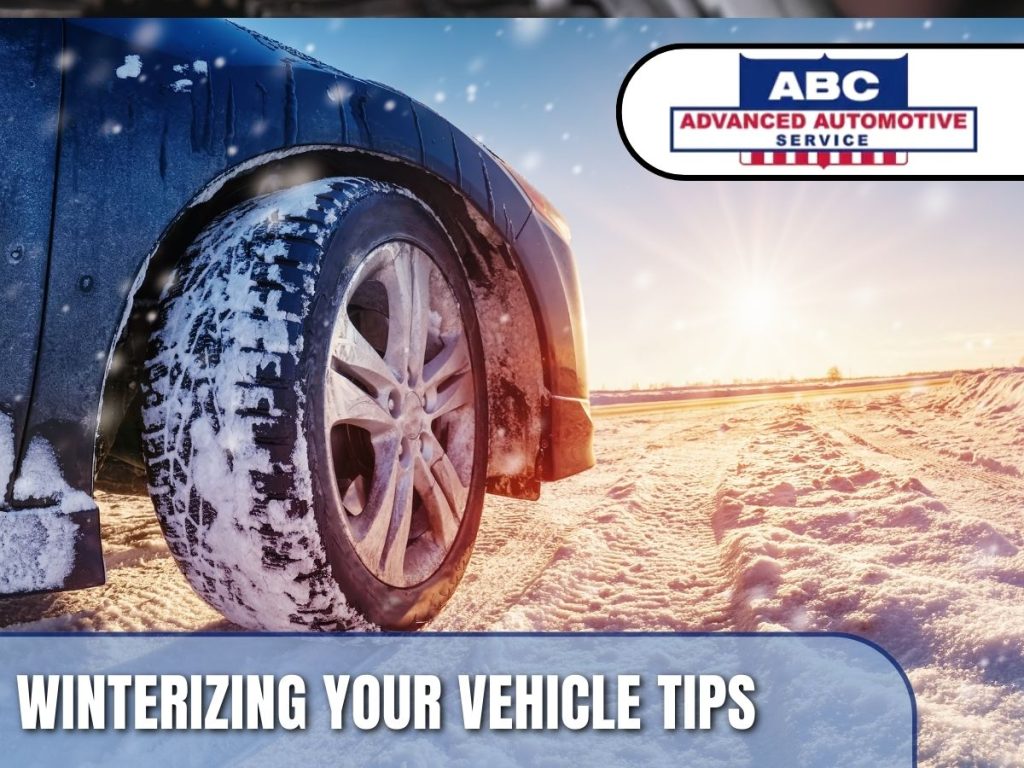
- Winter Tires: These are designed with special rubber compounds and deeper treads for improved grip on icy and snowy roads. Consider installing a full set.
- Tread Depth: Ensure a tread depth of at least 5/32 inches. Tires with shallow treads increase the risk of slipping.
- Tire Pressure: Cold weather causes tire pressure to drop. Check and maintain the recommended PSI regularly.
Evaluate the Braking System
Brakes are crucial in winter conditions, where stopping distances can be longer on icy roads.
- Have your brake pads and rotors inspected for wear.
- Check for brake fluid leaks that can affect braking performance.
- If your vehicle has an Anti-Lock Braking System (ABS), ensure it’s functioning correctly.
Inspect Wipers and Lights for Visibility
Poor visibility in winter conditions can lead to accidents.
- Replace worn-out wipers with heavy-duty winter wiper blades that can handle snow and ice.
- Ensure headlights, brake lights, and turn signals work properly to improve your visibility and signal your intentions to other drivers.
- Clean headlights regularly to remove grime that reduces brightness.
Winter Driving Essentials and Emergency Preparedness
Even with proper vehicle maintenance, unexpected situations can arise. Having a well-prepared emergency kit and knowledge of winter driving techniques can keep you safe.
Pack a Winter Emergency Kit
When winter weather strikes, having an emergency kit in your car can make all the difference, especially if you find yourself stranded or dealing with a breakdown. Make sure your vehicle is equipped with these 8 crucial items:
- Ice Scraper and Snow Brush – For removing snow and frost from your windows and mirrors, ensuring visibility.
- Jumper Cables – Cold temperatures can quickly deplete your battery, so jumper cables are a must to restart your car.
- Blanket and Warm Clothing – Keep yourself cozy if you’re stuck for a long time in the cold.
- Flashlight with Extra Batteries – A flashlight is essential for visibility during nighttime emergencies or when you’re stuck in low light.
- First Aid Kit – A basic first aid kit will allow you to tend to minor injuries while waiting for help.
- Non-Perishable Snacks and Bottled Water – Stay nourished and hydrated during extended waits or while waiting for assistance.
- Traction Aids (sand, cat litter, or traction mats) – These tools help free your car from snow or ice, making it easier to drive away.
- Portable Phone Charger – Ensure your phone stays charged for communication during emergencies.
By packing these essential items, you’ll be better prepared to handle unexpected situations during winter travel.
Keep the Fuel Tank at Least Half Full
Keeping your fuel tank at least half full prevents condensation from forming and freezing in the fuel lines and ensures you have enough fuel in case of unexpected detours or delays due to road closures.
Monitor Road Conditions and Weather Reports
- Check weather updates before traveling to avoid being caught in storms.
- Plan routes carefully, sticking to major roads that are plowed and salted frequently.
- Let someone know your travel plans in case you run into trouble.
Safe Driving Strategies in Winter Conditions
Winter driving requires extra caution due to slippery roads and reduced visibility.
- Accelerate and brake gently to avoid skidding. Sudden movements can cause loss of control.
- Increase following distance to at least six seconds to give yourself more stopping time.
- Use lower gears for better traction when driving on hills.
- If you start to skid, steer in the direction of the skid and avoid slamming on the brakes.
- Don’t use cruise control in icy conditions, as it can cause unexpected acceleration.
Case Study: A Winter Road Trip Saved by Preparation
John’s Story:
Last December, John planned a family road trip through the mountains. Before leaving, he followed key winterizing steps:
✅ Installed winter tires for better traction.
✅ Replaced his battery and wiper blades for reliability.
✅ Packed an emergency kit with food, blankets, and a phone charger.
Halfway through the journey, a sudden snowstorm reduced visibility and covered the roads in ice. Many vehicles struggled with traction, but John’s winter tires kept his car steady. When traffic halted for hours due to an accident ahead, John and his family stayed warm inside the car, thanks to the extra blankets and food they had packed. His preparation ensured a stress-free, safe trip despite unexpected challenges.
Conclusion
Winterizing your vehicle is a crucial step to ensuring safety and reliability during the cold months. From checking fluids, tires, and the battery to packing an emergency kit and driving cautiously, these steps will help you stay prepared for any winter driving conditions.
Before winter arrives, inspect your vehicle for potential issues, including the symptoms of failing alternators, to avoid breakdowns and ensure safe, hassle-free travel all season long!
FAQs on Winterizing Your Vehicle
1. How often should I check my car battery in winter?
Check your battery every month in winter. If your battery is over three years old, test it frequently to ensure it holds a charge.
2. Can I use all-season tires instead of winter tires?
While all-season tires work in mild winter conditions, they may not provide enough traction on icy or snowy roads. Winter tires are recommended for maximum safety.
3. What is the best type of antifreeze for winter?
A 50/50 mix of antifreeze and water is standard. Check your car’s manual for specific recommendations.
4. How do I prevent my windshield from freezing overnight?
- Use a frost guard cover or apply a vinegar-water solution before parking.
- The park faces east so the morning sun helps melt any ice buildup.
5. Should I let my car warm up before driving in winter?
Modern engines don’t require long warm-ups. 30 seconds to 1 minute is enough before driving gently to warm up the engine.
Stay Safe This Winter!
For more expert tips on vehicle maintenance and safe driving, explore our latest articles and resources. Stay prepared, stay safe, and enjoy a worry-free winter season! 🚗❄️